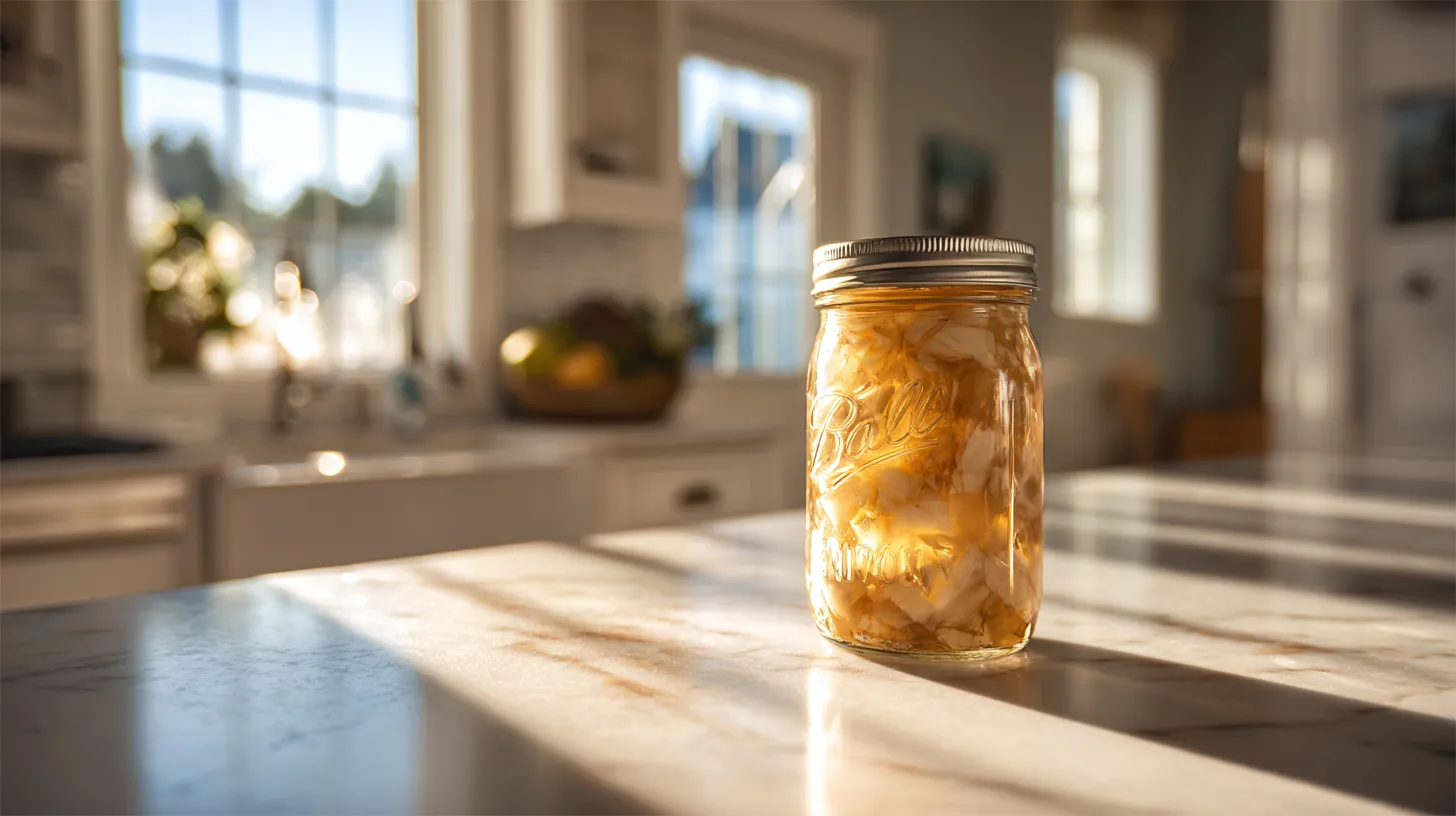
Prepare Jars: Examine all jars for cracks or chips and discard any damaged jars. Wash jars and rings in hot soapy water, rinse thoroughly, and keep jars hot in a 180°F oven or simmering water until ready to fill.
Prepare Jars: Examine all jars for cracks or chips and discard any damaged jars. Wash jars and rings in hot soapy water, rinse thoroughly, and keep jars hot in a 180°F oven or simmering water until ready to fill.
Ready Canner: Add 2-3 inches of water to your pressure canner and place the rack inside. Begin heating the canner while preparing the chicken to save time during processing.
Prepare Chicken: Remove all skin, bones, and visible fat from fresh chicken using a sharp knife. Cut chicken into pieces that fit easily into jars with proper headspace. Keep chicken refrigerated until ready to pack and work quickly to maintain food safety.
Choose Packing Method: For raw pack, fill jars with raw chicken pieces leaving 1 1/4 inches headspace, add salt if desired, then cover with boiling water or broth. For hot pack, pre-cook chicken until heated through but not fully cooked, then pack hot chicken and cooking juices into jars.
Fill Jars with Chicken: Pack chicken pieces into hot jars, leaving exactly 1 1/4 inches headspace from the rim. Do not press chicken down firmly as this can prevent proper heat penetration during processing.
Add Liquid and Salt: Add salt to each jar if desired for flavor, then cover chicken with boiling water or broth, maintaining the 1 1/4 inches headspace. Ensure liquid covers chicken completely but does not exceed headspace requirements.
Remove Air and Seal: Remove air bubbles by running a plastic tool around the inside of each jar, adjusting liquid level as needed to maintain proper headspace. Wipe jar rims thoroughly with a clean, damp cloth and center hot lids on jars with rings finger-tight only.
Load Canner: Place filled jars on the canner rack using a jar lifter, ensuring jars do not touch each other or the sides of the canner. Lock canner lid in place and heat on high until steam vents steadily for 10 minutes to purge air from canner.
Process Under Pressure: Place pressure regulator on vent and process at 11 pounds pressure for 75 minutes for pints or 100 minutes for quarts. Adjust pressure for altitude: 1,001-2,000 feet use 11 lbs, 2,001-4,000 feet use 12 lbs, 4,001-6,000 feet use 13 lbs, 6,001-8,000 feet use 14 lbs. After processing, turn off heat and let pressure return to zero naturally before opening canner.