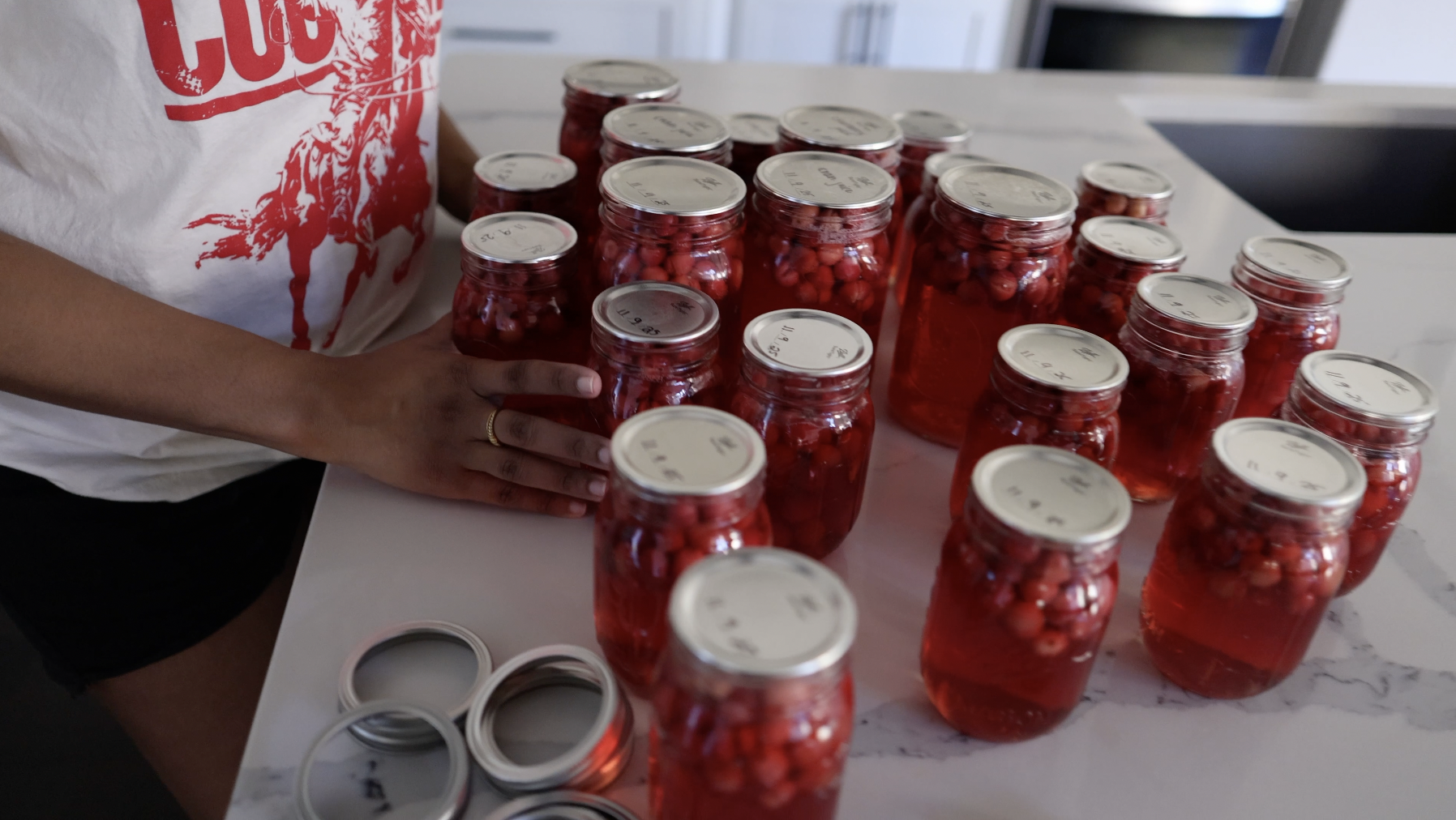


I haven’t bought a can of tomatoes in over two years.
Or canned beans. Or canned anything, really.
And honestly? I don’t buy much pantry food at all anymore.
Now before you picture me spending hours every day in the kitchen stirring giant pots or meticulously rotating jars, let me stop you right there. That’s not what this is.
What I’m talking about is food preservation. And it’s the single skill that has saved our family over $300 every single month.
What Food Preservation Actually Looks Like for Us
When I say I don’t buy pantry food anymore, here’s what I mean:
I walk through the grocery store and skip entire aisles. The canned goods aisle? Don’t need it. The pasta sauce aisle? Nope. The soup aisle? Pass.
Because we already have all of that at home. In jars. In buckets. In mylar bags.
When cucumbers are growing in our garden or someone in our community has extras, we pickle them. When tomatoes are in season, we pressure can them—whole, diced, turned into sauce. When we get a good deal on dried beans or rice, we buy in bulk and store them properly in 5-gallon buckets so they last for years.
Our pantry looks different than most people’s. You’ll find rows of glass jars filled with food we preserved ourselves. You’ll find cloth-covered buckets of staples like wheat, rice, and legumes. You’ll find dehydrated vegetables that we can throw into soups or rehydrate for meals.
And here’s the best part: I’m not constantly checking expiration dates or rotating stock. Because when you preserve food properly, it lasts. Years, not months.
Why This Changes Everything
The obvious benefit is money. We’re saving over $300 a month by not buying prepared or packaged pantry items.
But it’s so much more than that.
First, there’s quality. I know exactly what’s in our food because I put it there. No mystery ingredients. No seed oils. No preservatives I can’t pronounce.
Second, there’s security. Remember how I said we have a year’s worth of food? A huge chunk of that is because of preservation. We’re not dependent on the grocery store restocking shelves or prices staying reasonable.
Third, there’s control. When food prices spike, we’re insulated. When there’s a recall on canned tomatoes, it doesn’t affect us. When we want to cut our grocery budget, we can lean into what we’ve already preserved and stored.
And finally, there’s peace. There’s something deeply satisfying about opening your pantry and seeing food you preserved with your own hands. Food that will nourish your family for months or years to come.
How We Actually Use This Food
This isn’t just emergency food sitting on a shelf gathering dust.
This is what we cook with every single week.
When I’m making chili, I grab our home-canned tomatoes and beans. When I’m making soup, I pull out dehydrated vegetables. When I need rice or wheat for bread, I scoop it from our buckets.
It’s become so normal that I honestly forget most people don’t live this way. My kids think it’s completely normal to have a pantry full of jars and buckets instead of boxes and cans.
And the time investment? It’s actually less than you’d think. I preserve food in batches. When tomatoes are in season, I’ll spend a Saturday pressure canning. When I buy bulk staples, I’ll spend an afternoon properly packaging them in mylar.
But I’m not doing this every week. I’m not constantly maintaining a rotating system. I do it in bursts, and then we just live off of it.
You Can Build This Too
Here’s what I want you to hear: you don’t need to learn every preservation method at once.
You don’t need to can 100 jars of tomatoes your first year or buy a $3,000 freeze dryer tomorrow.
You can start simple. Learn one method. Preserve one type of food. Buy one 5-gallon bucket and fill it with rice or beans.
Every jar you fill, every bucket you pack, every skill you learn is one more step toward food independence. One more way to opt out of the grocery store’s markup. One more option for your family.
And those options add up. To $300 a month. To peace of mind. To real food security.
If you’re ready to learn how to build these systems for yourself—not just food preservation, but water independence, energy resilience, and everything else your family needs to thrive outside conventional systems—check out my Sovereignty Blueprint.
This is where I walk you through exactly how we built our self-sufficient life, step by step, starting with wherever you are right now.
Because the skills you’re building today? They’re the ones that will serve your family for decades to come.

Interested in learning to build more options out of the system? Click here. Or join my newsletter where I share tips each week.
Thanks for reading!


Food independence
How We Built A Years Worth of Food Security
Popular Posts

Self Sufficiency
My 2020 Wake Up Call That Changed My Life

self sufficiency
What Self Reliance Really Means

Food preservation
The #1 Skill That Saves Us $300/month


New around here? Start with these resources
the FREEBIES

How To Detox Your Home Naturally
download
Self Sufficiency Checklist
download
The World Full of Natural Remedies
download
A daily 90-second lesson delivered straight to your inbox, with the exact steps I took to eliminate my dependencies - house, electricity, water, food - and get out in just 5 years (without leaving the suburbs, without acres of land).
Fast track your exit path from 30 -> to 5 years
free email course

Join over 1K+ Individuals & families
