

The number you see everywhere is 25 years. It is on the boxes, it is in the ads, it is the first thing anyone says when freeze drying comes up. I want to tell you where that number comes from, where it holds up, and where it quietly falls apart, because I have been running my freeze dryer long enough now to have opened bags that were perfect and bags that were not.
The short version is that 25 years is real, but it is a ceiling, but sadly it’s just not a promise. It describes food that was dried all the way, sealed properly, and stored somewhere cool and dark. Change any one of those three things and the number drops fast. Sometimes to a few years. Sometimes to a few months.
So the honest answer to how long freeze dried food lasts is that it depends almost entirely on what you did to it after the machine finished.
Where the 25 Year Number Actually Comes From
Freeze drying pulls out somewhere around 98 or 99 percent of the water in food. That matters because water is what everything else needs. Bacteria need it. Mold needs it. The chemical reactions that turn food stale and rancid need it. Take the water out and you have taken away the fuel.
Dehydrating gets you to maybe 90 or 95 percent water removed, which sounds close but is not. That remaining moisture is why dehydrated food is measured in months and a year or two, while freeze dried food is measured in decades. I go into the difference more in the dehydrating guide, and both methods have a place in my pantry. They just answer different questions.
The 25 year figure comes from testing on commercially packaged, fully dried food in sealed containers with oxygen absorbers, kept at moderate room temperature. Every part of that sentence is doing work. At home you can hit all of it. You can also miss it without knowing.
The Three Things That Decide How Long Your Food Lasts
1. Whether it was actually dry when you bagged it
This is the one that gets people, and it got me. A batch that looks finished can still be holding moisture in the middle, especially thick pieces and anything with a high sugar content. Strawberries and pineapple are famous for this. The outside goes crisp and the center stays slightly soft, and you bag it feeling good about yourself.
Food bagged wet does not last 25 years. It might last one. You will open it and find clumping, or a faint sour smell, or the pieces will have gone leathery instead of snapping.
The test I use costs nothing. Take the thickest piece from the middle of the middle tray and break it in half. It should snap and be uniformly dry all the way through, no cool spot, no bend, no chew. If it bends, put the whole batch back in for more dry time. On my machine I run extra dry time on anything sugary as a matter of habit now, because I would rather waste a couple of hours than a whole batch.
The other trick is to weigh a tray before and after. When the weight stops dropping, the water is gone. It is more work, but if you are putting up something expensive or something you are counting on, it removes the guessing.
2. What you sealed it in
Oxygen is the second enemy. It will not make your food unsafe the way moisture can, but it will slowly eat the color, the flavor, and the nutrition. Food stored with air in the bag goes dull and cardboardy long before it goes bad.
Here is roughly what I have found each option buys you, assuming the food went in properly dry:
- Mylar bag, sealed, with an oxygen absorber. This is the 25 year setup. Mylar blocks light and air in a way plastic does not. This is what I use for anything I am genuinely storing long term.
- Mason jar with a sealed lid and an oxygen absorber. Also excellent, and my preference for anything I open often. Glass does not block light, so these live in a dark cabinet. Call it 15 to 25 years.
- Vacuum sealed plastic bag. Good for a few years. Plastic is slightly permeable to oxygen over long stretches, so this is a middle option, not a forever one.
- Ziplock bag. Months. Fine for the jar of freeze dried fruit that lives on the counter and gets eaten, useless for storage.
One thing worth knowing: an oxygen absorber is not a moisture absorber. It pulls oxygen out of the bag and does nothing about water. People sometimes throw one in hoping it will rescue a batch that was not quite dry. It will not.
3. Where you put it
Heat is the quiet one. It does not spoil food so much as age it. Every jump in storage temperature speeds up the reactions that dull flavor and break down vitamins.
A cool interior closet is close to ideal. A basement that stays cool and does not flood is good. An attic is the worst place in the house and it is where an enormous number of people put their food storage, because that is where the space is. A hot garage in Texas is not much better. I learned this one by watching a friend lose most of a shelf to heat over two summers, and nothing about the bags looked wrong from the outside.
Light matters too, which is why the jars go in a cabinet. Sunlight fades freeze dried fruit quickly and takes nutrition with it.
How Long Different Foods Really Last
Not everything gets the same number, and this is where the marketing gets sloppy. Fat is the reason. Fat does not freeze dry out, it stays in the food, and fat eventually goes rancid no matter how dry and sealed everything is.
- Fruit. 25 years, comfortably. Almost no fat, low complexity, dries beautifully. My strawberries, blueberries, and watermelon all sit in this group.
- Vegetables. 25 years. Same reasoning.
- Cooked grains, beans, pasta. 25 years, and these are the backbone of actual meal storage rather than snacks.
- Lean meat, cooked, trimmed well. 15 to 25 years. Trimming matters more than people expect. Fat left on the meat is the clock.
- Fatty meat, or anything cooked in oil. 5 to 10 years at best. I mostly do not bother.
- Dairy and eggs. 10 to 15 years. Cheese has enough fat to shorten things, and eggs do better than people assume if they are cooked first.
- Full meals with sauces and butter. Shorter than the sum of the parts, usually 5 to 10 years. Convenient, and a genuine trade against shelf life.
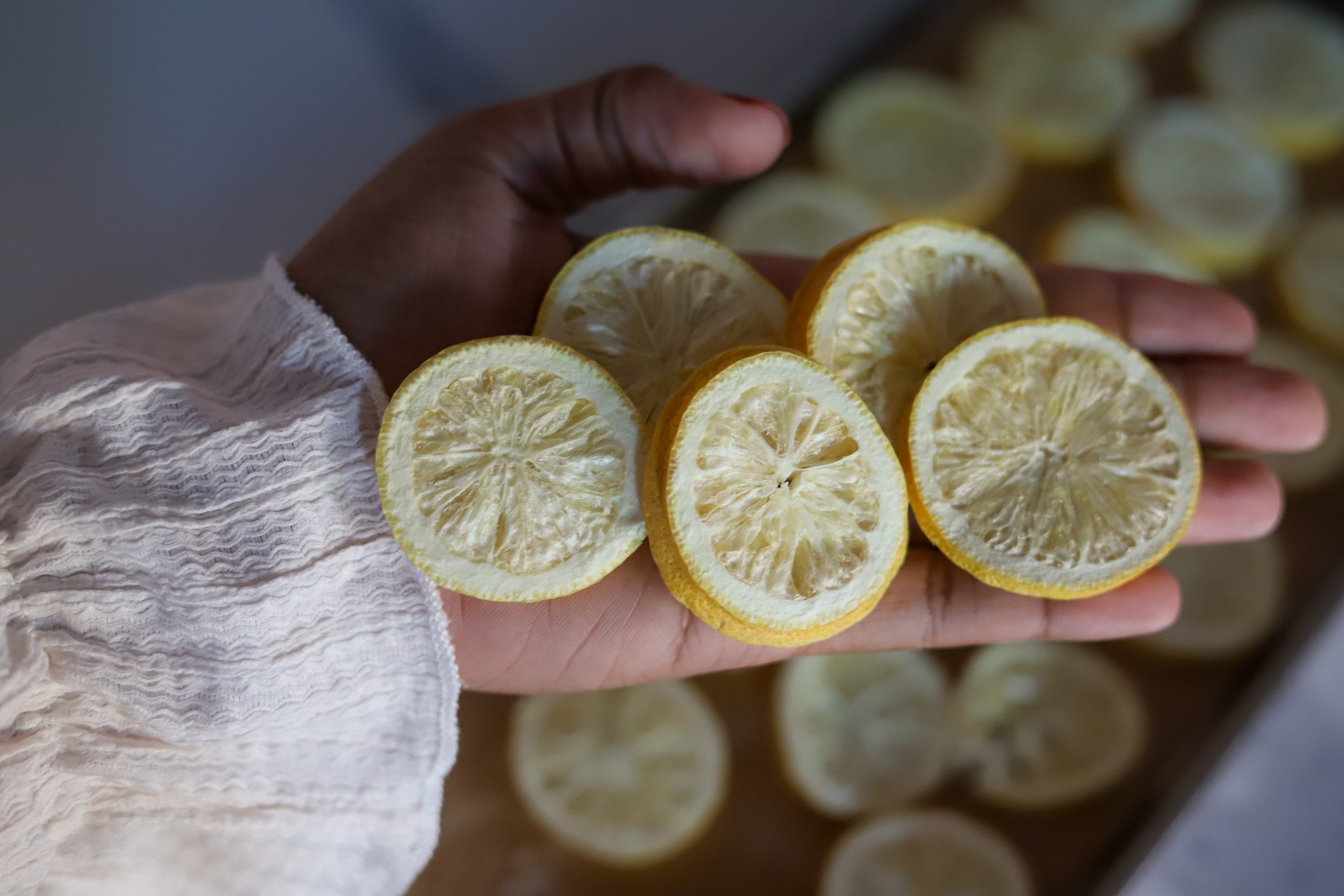
Citrus is its own case. My freeze dried limes keep for decades in a sealed jar, but the flavor oils in the peel fade sooner than the fruit itself does. They will still be good at year 20. They will smell better at year 2.
How to Tell If Freeze Dried Food Has Gone Bad
Properly stored freeze dried food does not really spoil the way fresh food does. What happens instead is that a seal fails, or the food was not dry to begin with, and then moisture gets in and normal spoilage starts.
What to check when you open something old:
- Is the bag still tight? A Mylar bag with a working oxygen absorber pulls in on itself and feels firm. If it has gone soft and puffy, air got in and you need to look closer.
- Does it still snap? Bend a piece. Chewy or bendy means moisture, and moisture means the clock has been running.
- Is anything clumped together? Loose pieces that have fused into a block absorbed water somewhere along the way.
- Any smell? Freeze dried food should smell faintly like itself or like almost nothing. Sour, musty, or a crayon and old nuts smell means rancid fat.
- Any discoloration or fuzz? Mold cannot grow without water, so seeing it means water got in. Throw the whole container out, not the visible part.
Fading on its own is not spoilage. Fruit that has gone pale after fifteen years in a jar is still fine to eat, it has just lost some vitamin content and some color. That is normal aging and not a reason to throw anything away.
What This Looks Like in My House
I run the medium Harvest Right, the five tray one. It is the size that made sense for a family our size, and every time and batch number I quote anywhere on this site comes off that machine.
What I have settled into is two categories of storage, and I think this is the useful part.
The first is the deep stuff. Mylar, oxygen absorbers, labeled with what it is and the month I ran it, stacked in a cool interior closet. This is the food I am not planning to touch. It is insurance, and it is the reason a bad month or a bad year does not turn into a crisis. Most of it is fruit, vegetables, and cooked beans and rice.
The second is the working pantry. Mason jars in a dark cabinet, opened and closed constantly, refilled from batches I run through the summer when produce is cheap. This food is not being stored for 25 years and it does not need to be. It is being stored for eight months, until the same fruit is cheap again.
That second category is the one that actually changed our grocery bill, and it gets far less attention than the wall of Mylar. The insurance is nice. The rotation is what saves money every single week. I wrote more about how the whole pantry fits together in building a self-sufficient pantry and about which foods are worth the space in best foods for long-term storage.
A Note on Buying a Machine for the Shelf Life Alone
I get asked whether the 25 years justifies the cost, and I want to be straight about it. If the only thing you want is a wall of food you never touch, you can buy that already packaged for less money and less effort than a freeze dryer costs.
The machine earns its place when you use it constantly. Buying strawberries by the flat in June because they are cheap. Putting up the vegetables before they turn. Running leftovers instead of scraping them into the trash. That is where the math works, and it worked well enough for us that I would buy the medium Harvest Right again without thinking hard about it.
If you are still deciding, start with how to freeze dry food at home, which walks through what the process actually involves day to day. And if preserving in general is new to you, the ultimate guide to food preservation covers where each method fits.
Frequently Asked Questions
Does freeze dried food really last 25 years?
Yes, when it was dried all the way through, sealed in Mylar or glass with an oxygen absorber, and kept somewhere cool and dark. Miss any of those and the real number is shorter. Most home batches that fail short of the mark failed because they were bagged before they were fully dry.
How long does freeze dried food last once you open the bag?
The 25 year clock stops the moment air gets in. An opened bag or jar that gets resealed tightly is good for several months to about a year before the texture starts to go. If you open something and only want part of it, move the rest into a smaller jar so there is less air sitting on top of it.
Does freeze dried food need to be refrigerated?
No, and I would avoid it. A fridge is humid, and every time you take a container out and back in you get condensation. Room temperature in a dark cupboard beats the fridge for anything freeze dried.
Can freeze dried food make you sick?
Properly dried and sealed, it is one of the safest ways to keep food. The risk comes from moisture getting in, either because it was bagged damp or because a seal failed. That is ordinary spoilage after that, so treat it the way you would treat any food: if it smells wrong, looks wrong, or has any fuzz on it, throw it out.
Do you need oxygen absorbers if you vacuum seal?
For long term storage, yes. Vacuum sealing removes most of the air but not all of it, and plastic lets a little oxygen through over the years. For anything you plan to eat within a couple of years it is fine on its own.
How do you know when a batch is dry enough?
Take the thickest piece from the center tray and snap it in half. It should break cleanly and feel the same temperature and texture all the way through. Any bend, chew, or cool spot in the middle means more dry time. Weighing a tray until the weight stops falling is the more precise version of the same test.
Does freeze dried food lose nutrition over time?
It keeps most of it, which is the real advantage over other methods, but vitamin C and some B vitamins fade slowly over the years. Calories, protein, fiber, and minerals stay put. Food that has lost color has usually lost some vitamin content along with it, and it is still perfectly good food.
Final Words
If you remember one thing from all of this, make it the snap test. Shelf life is decided in the ten seconds before you seal the bag, not by the number on the box. Dry it all the way, get the air out, keep it cool and dark, and the decades take care of themselves.
And do not let the 25 years become the point. The food that changed things for us was never the food we were saving for some far off bad day. It was the fruit we bought cheap in June and ate in February.
Want to start putting food up without buying a machine first? Canning is where I started, and it is still the cheapest way to buy food at the bottom of the price curve and eat from it all year. My free Canning Quick Start walks you through your first batch without the overwhelm. Grab it here.

Interested in learning to accelerate your path to freedom? Click here. I'll help you speed up your path to freedom by decades.
Thanks for reading!


Food independence
How We Built A Years Worth of Food Security
Popular Posts

Self Sufficiency
My 2020 Wake Up Call That Changed My Life

self sufficiency
What Self Reliance Really Means

Food preservation
The #1 Skill That Saves Us $300/month
New around here? Start with these freebies
The Digital
FREEBIES
The Ownership Playbook
Cut off 10+ years to early freedom

The Book of Natural Remedies
download

The Canning Quick Start Guide
Can your first batch in 2 hours

