I'm a woman who left a corporate job, paid off every bill we used to owe every month, and bought back our time decades before retirement. My mission? To teach families how to do the same by owning more of their life.
Hi! I'm Janiece
Listen to the pod
Ownership Playbook
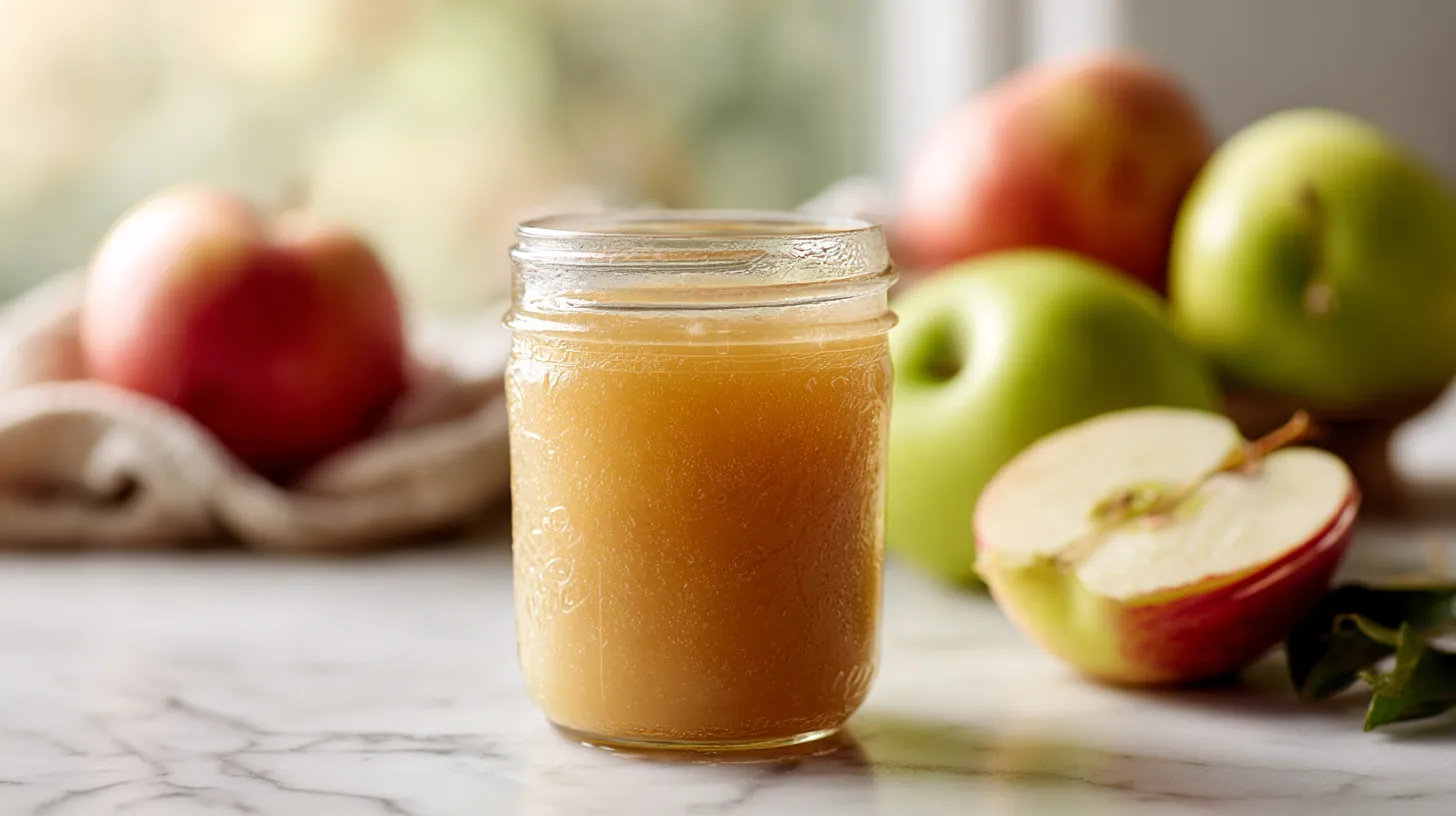
Can we talk about one of the most underrated life skills that’s making a serious comeback? Learning how to can applesauce without sugar isn’t just about preserving fruit – it’s about taking control of what goes into your family’s food and creating pantry staples that are both delicious and nutritious. If you’re wondering how to start canning or looking for a beginner-friendly recipe that delivers incredible results, you’ve found your perfect starting point. There’s something deeply satisfying about transforming a basket of fresh apples into jars of golden, naturally sweet applesauce that will grace your table for months to come.
Why Learn How to Can Applesauce Without Sugar
Here’s the truth that the food industry doesn’t want you to know: apples are naturally sweet enough on their own! When you learn how to can applesauce without sugar, you’re not just creating a healthier option – you’re discovering how incredible real, unadulterated fruit tastes. Store-bought applesauce is loaded with added sugars, preservatives, and artificial ingredients that mask the beautiful, complex flavors of quality apples. Plus, sugar-free applesauce is perfect for everyone in your family, from babies just starting solids to diabetic relatives who deserve delicious food too.
Best Apples for How to Can Applesauce Without Sugar
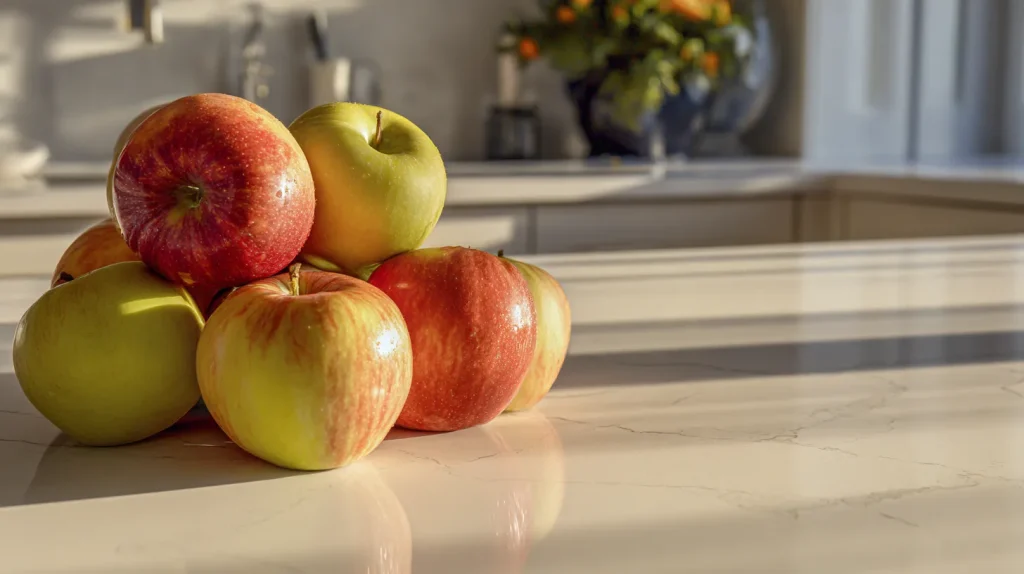
The secret to incredible sugar-free applesauce lies in choosing the right apples. Sweet varieties like Gala, Fuji, Honeycrisp, and Golden Delicious will give you naturally sweet applesauce without any added sweeteners. I love mixing different varieties for complex flavor – maybe some tart Granny Smiths with sweet Galas for that perfect balance. The beauty of making your own is that you get to control every element, creating a signature blend that’s uniquely yours.
Equipment Needed for How to Can Applesauce Without Sugar
Before we dive into the process, let’s talk about what you’ll need. A large pot for cooking your apples, a food mill or immersion blender for smooth texture, canning jars with new lids, a boiling water bath canner, and basic canning tools like a jar lifter and headspace tool. Don’t let the equipment list intimidate you – most of these are one-time investments that will serve you for years of canning adventures.
Step-by-Step Guide: How to Can Applesauce Without Sugar
Start by washing and coring your apples – you can leave the peels on for extra nutrition and that beautiful pink color they’ll add to your finished sauce. Cut apples into chunks and place them in a large pot with just enough water to prevent sticking, usually about 1/2 cup for a large batch. Cook over medium heat, stirring occasionally, until the apples are completely tender and breaking down naturally.
Once your apples are cooked, it’s time to create that perfect smooth texture. Use a food mill for the silkiest result, or an immersion blender if you prefer a slightly chunkier consistency. The natural pectin in the apples will give you that perfect, thick applesauce texture without any artificial thickeners.
How to Can Applesauce Without Sugar
Learn how to can applesauce without sugar using this simple, safe recipe.
2tbspBottled lemon juice per quart of applesauce (optional for color retention)
1tspAscorbic acid per quart of applesauce (optional for color retention)
Equipment
Large heavy-bottomed pot for cooking apples
Food mill, food processor, or immersion blender
Boiling water bath canner or large stockpot with rack
8-9 Pint (16 oz) canning jars with new lids and rings
Jar lifter, bubble removal tool, and headspace gauge
Ladle and wide-mouth funnel
Method
Prepare Jars: Examine all jars for cracks or chips and discard any damaged jars. Wash jars in hot soapy water, rinse thoroughly, and keep hot in a 180°F oven or hot water until ready to fill.
Heat Lids: Place new canning lids in a small saucepan, cover with hot water at 180°F, and keep hot until ready to use. Do not boil lids as this may damage the sealing compound. Wash rings in hot soapy water.
Prepare Canner: Fill your boiling water bath canner with enough water to cover jars by 1-2 inches when submerged. Begin heating water to a rolling boil while preparing applesauce.
Prepare Apples: Wash apples thoroughly and remove stems and blossom ends. Core apples and cut into quarters or eighths. Peeling is optional but leaving peels on adds nutrition and natural color to the finished applesauce.
Cook Apples: Place prepared apples in a large heavy-bottomed pot with just enough water to prevent sticking, usually 1/2 to 1 cup depending on apple juiciness. Cook over medium heat, stirring frequently, until apples are completely tender and breaking down, approximately 15-20 minutes.
Process to Sauce: Using a food mill for smoothest texture, food processor for medium texture, or immersion blender for chunky texture, process cooked apples to your desired consistency. Add bottled lemon juice or ascorbic acid if desired for color preservation.
Heat Applesauce: Return processed applesauce to pot and heat to 190°F, stirring constantly to prevent scorching. Maintain this temperature throughout the filling process to ensure safe canning temperatures.
Fill Jars: Using a ladle and wide-mouth funnel, fill hot jars with hot applesauce, leaving exactly 1/2 inch headspace. Remove air bubbles by running a plastic tool around the inside of each jar, adjusting headspace as needed.
Seal Jars: Wipe jar rims clean with a damp paper towel to remove any applesauce residue. Center hot lids on jars and apply rings finger-tight only. Using jar lifter, place filled jars on canner rack.
Process in Water Bath: Lower jars into boiling water, ensuring they are covered by 1-2 inches of water. Process pint jars for 20 minutes or quart jars for 25 minutes. Adjust processing time for altitude: add 5 minutes for 1,001-3,000 feet, add 10 minutes for 3,001-6,000 feet, add 15 minutes for above 6,000 feet. Remove jars and cool undisturbed for 12-24 hours.
Notes
Natural apple acidity makes this safe for water bath canning without added acid
Do not add sugar, honey, artificial sweeteners, or spices as these can affect acidity and safety
Check that all lids have sealed properly before storing (lids should not flex when pressed)
Store sealed jars in a cool, dark place for up to 2 years for best quality
Refrigerate after opening and use within 1 week
Discard any jars with bulging lids, off odors, or unusual appearance
Natural separation or darkening may occur and is normal for sugar-free applesauce
Safe Processing: How to Can Applesauce Without Sugar
Here’s where food safety becomes crucial. Heat your prepared applesauce to 190°F and ladle it into hot, sterilized jars, leaving 1/2 inch headspace. The natural acidity in apples makes them safe for water bath canning – no pressure canner needed! Process your jars in a boiling water bath for 20 minutes, adjusting for altitude as needed.
Storage Tips for How to Can Applesauce Without Sugar
Once your jars have cooled and sealed properly, store them in a cool, dark place where they’ll maintain peak quality for up to two years. I love labeling mine with the apple varieties used and the date – it becomes like a little time capsule of that particular harvest season.
Creative Uses for Sugar-Free Applesauce
This versatile applesauce isn’t just for eating straight from the jar (though it’s absolutely delicious that way!). Use it as a natural sweetener in baking, mix it into oatmeal, serve it alongside pork dishes, or blend it into smoothies for natural sweetness and fiber.
Transform Your Kitchen with Food Independence
Learning how to can applesauce without sugar is about more than preserving fruit. It’s your gateway to true food independence. You’re also connecting with generational knowledge that our ancestors understood instinctively.
When you master how to start canning with simple recipes like this, you’re building valuable skills. These skills will serve your family for generations. You’re creating a pantry filled with wholesome, preservative-free foods you can feel good about serving.
There’s incredible empowerment in creating nutritious, delicious food. This food is free from unnecessary additives and perfectly
Interested in learning to accelerate your path to freedom? Click here. I'll help you speed up your path to freedom by decades.
I cut decades off my family's path to financial freedom by refusing to play the game everybody else was playing. Now, I help thousands of families build the life of their dreams through ownership and good ol' fashioned skills.
If you're tired of renting your life and ready to own it, you'll get the real stories, the lessons that saved me years, and one small step each week to move you closer. You in?